RFP in Construction: How to Respond to Win the Job



Choosing a general contractor is a high-stakes gamble from an owner’s perspective. On paper, three different contractors may look identical in terms of expertise and customer reviews.
However, the wrong choice can lead to delays and budget overruns. To avoid this risk, the construction industry relies on a specific tool: the Request for Proposal (RFP).
This document gives a clear overview of the project scope and the owner’s expectations. It helps the owner invite a contractor or a vendor to submit proposals and also gives contractors a detailed understanding of what is expected from them.
This blog will break down what is an RFP in construction, what it contains, and how contractors should respond.
Table of Contents
- What is a Request for Proposal (RFP) in Construction?
- RFP vs. RFQ vs. ITB
- Key Components of RFP in Construction
- Responses to RFP: What to Consider to Win a Job
- Summing Up RFP in Construction
What is a Request for Proposal (RFP) in Construction?
A Request for Proposal (RFP) in construction is a formal invitation by a project owner to the general contractors, subcontractors, or vendors to submit detailed proposals for a specific project.
It includes details related to the project, such as the scope of work, project requirements, timeline, and evaluation criteria. Thus, bidders have a clear understanding of what to expect from the project and how they will be assessed.
The main purpose of the document is to have a more informed and structured contractor selection process. It does not just break down the costs but also presents the experience and technical skills of contractors and subcontractors to understand if they fit the project.
Below is one of the common templates for a request for proposal.

Project Owner Perspective
For the owner, the RFP is a risk-management tool to choose between dozens of construction teams, one that will be hired to manage millions of dollars and months of scheduling.
Recommended reading:
There are several points that the project owner has to consider:
- Past performance: if the contractor has done the exact type of building before
- Technical skills: What skills and experience does the subcontractor or contractor have
- Realistic plans: owners assess whether the contractor’s timeline, budget, and overall approach are practical and achievable.
- Communication and transparency: if the proposal sounds professional and organized.
Contractor Perspective
For contractors, an RFP is a roadmap for preparing a competitive and relevant proposal. The RFP helps understand the scope of the project, as if it is vague, contingency may be higher, which finally results in a higher bid.
Recommended reading:
Responding to a complex project may take time and resources. Careful planning and coordination are needed, especially in the case of complex projects. This is the reason they usually look for an RFP when they have a unique advantage to win the project, for instance, some technical skills or specialized equipment.
RFP vs. RFQ vs. ITB
Construction terms may sometimes sound confusing. However, all three terms related to bidding mentioned here have slightly different meanings.
RFP is a formal invitation when the owner asks for a contractor’s technical expertise and specialized approach when dealing with a complex project. When choosing, the owner’s selection is based on the value that contractors can bring, not the lowest price. In this case, the owner has complex requirements and wants to find relevant expertise and quality.
Use Cases: A commercial building project where the owner wants to see detailed construction methods.
ITB (Invitation to Bid) is a competitive bidding process focused on finding the best price. In this case, the plans, specifications, and project plans are fully specified. In other words, it’s an invitation to submit a bid or price for a project.
Use Cases: Standard building construction or renovation with fixed plans.
RFQ (Request for Quotation) is an invitation to vendors to get detailed pricing for specific materials, equipment, or services. It does not require presenting methodology and timelines, just a price.
Use Cases: Finding the best price to source steel beams, windows, doors, and HVAC equipment.
Key Components of RFP in Construction
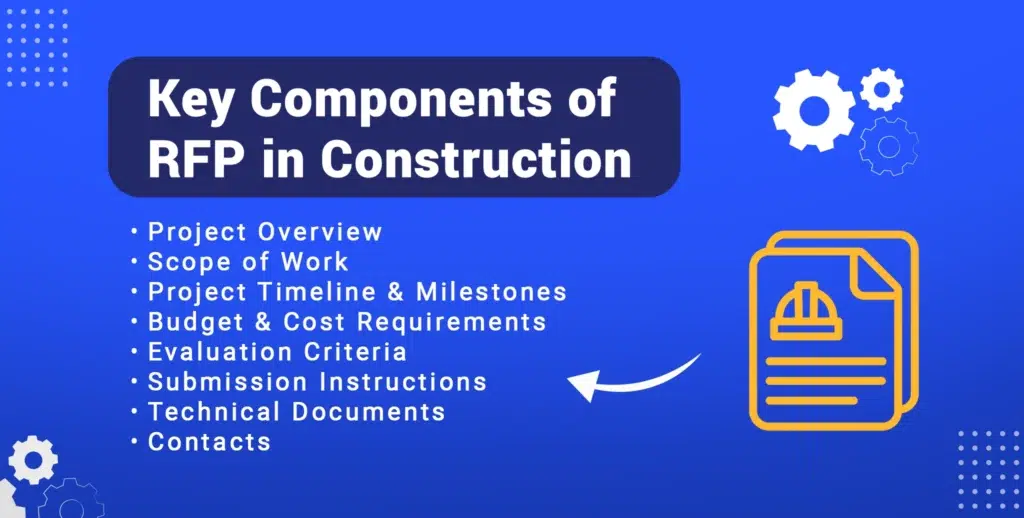
A well-prepared RFP in construction has to list all points necessary for attracting qualified contractors and ensuring that bids are comparable, clear, and actionable. The formats can vary, but let’s consider some details that are a must.
1. Project Overview
A brief introduction to the project, including the summary, description, purpose, location, and type of construction (commercial, residential, infrastructure, etc.). Objectives of the projects are also listed here.
2. Scope of Work
Detailed description of the work to be completed, including design, engineering, construction, and finishing tasks. Clear identification of responsibilities, deliverables, and project phases. Materials specifications and standard guidelines are also included here.
3. Project Timeline
Key milestones, deliverables, deadlines, and completion dates are mentioned. The format may vary. Some RFPs contain a clear table where all the points are included, others just have a line “the project should be completed by…”.
4. Budget and Costs
An estimated project budget (if applicable), guidelines for cost proposals, or instructions on how to present pricing, including breakdowns for labor, materials, and subcontractors.
5. Evaluation Criteria
It’s a critically important part that shows how proposals will be assessed. Transparency here helps contractors tailor their proposals to what matters most. For instance, the project owner will weigh in on the experience, technical approach, cost, and schedule provided by the contractor.
6. Submission Requirements
Information on how and where to submit proposals (email, portal, or physical delivery) with submission deadlines and contact information for questions.
7. Contact Information
Contact details of the project owner: company, organization, or individual.
8. Additional Documents
Detailed drawings, specifications, site surveys, geotechnical reports, or other relevant documents.
Short Example of RFP
Project Overview: …Development is seeking proposals for the design and construction of a 20,000 sq. ft. commercial building located in downtown… The project aims to deliver a modern, energy-efficient workspace with sustainable design features.
Scope of Work: The contractor will be responsible for site preparation, foundation work, exterior façade installation, and full interior fit-out. The proposal should include coordination with subcontractors, procurement of materials, and ensuring compliance with all building codes and regulations.
Project Schedule
| Proposal Submission Deadline | July 15, 2026 |
| Project Start Date | August 15, 2026 |
| Substantial Completion | June 2028 |
| Final Handover | August 15, 2028 |
Budget and Cost Guidelines: The estimated project budget is $4-5 million. Contractors are required to submit a detailed cost breakdown, including labor, materials, subcontractor costs, and contingency.
Proposal Requirements: Executive summary, technical approach and methodology, schedule, team qualifications and relevant experience, and cost proposal with breakdown.
Evaluation: The proposals will be evaluated based on technical approach (35%), relevant experience (25%), cost proposal (25%), and project timeline (15%).
Submission Instructions: All proposals must be submitted via email to … by 5:00 PM July 15, 2026.
Responding to RFP: What to Consider to Win a Job
The first step is probably to determine if the opportunity is worth pursuing. It’s true that not every RFP is the right fit, while the contractor invests time and effort into responding to it.
A strong RFP response starts with an evaluation of the key factors:
- Scope: Does the project match your expertise and past experience? Pursuing projects outside your core strengths can increase risk.
- Resource availability: Do you have the team, subcontractors, and capacity to take on the project without overextending your operations?
- Timeline feasibility: Is the proposed scheduling realistic?
Taking the time to assess these elements helps general contractors focus only on high-potential opportunities.
Here are several tips to consider when responding.
Fully Understand the Requirements
A number one tip is to carefully review the RFP to avoid missing details early.
- Scope of work and deliverables
- Submission requirements and deadlines
- Evaluation criteria
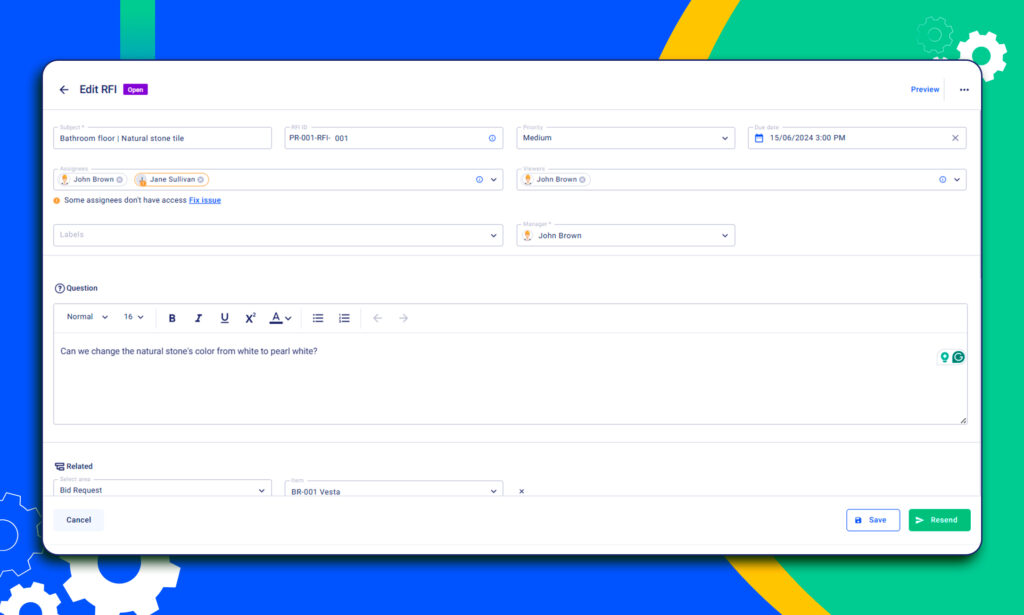
If anything is unclear, submit questions early through an RFI, as misinterpreting requirements is one of the most common reasons proposals fail.
Start With a Solid Estimate
As seen above, the RFP response requires the contractor to give a detailed cost breakdown, which in turn means deep estimating for a particular project.
This process is typically handled by a professional estimator or a team of estimators with the general contracting company or a contractor’s in-house team. At this stage, the overheads, profit margins, and contingencies are calculated.
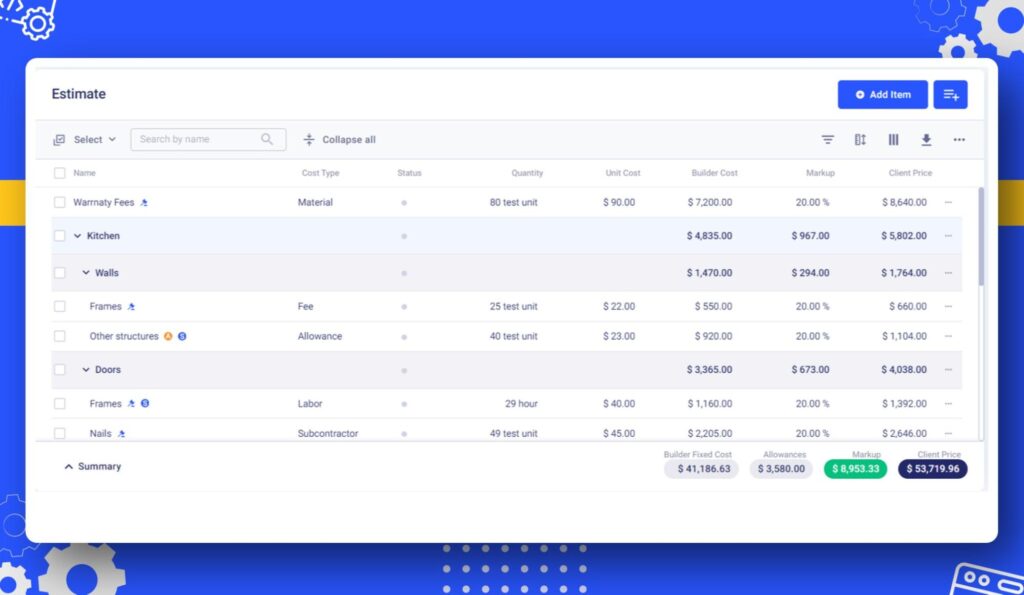
Thus, even small errors in estimating can lead to overpricing, which makes the proposal uncompetitive, or underbidding. When using construction estimating software, the process is automated. It’s related to takeoff, using cost catalogs, having automated bid leveling for subcontractor and vendor prices, as well as automatic markups and allowances.
Recommended reading:
Besides, estimating software allows teams to centralize data, reuse past estimates, use one of its versions, and quickly adjust numbers once there are some changes. In addition to reducing the time it takes to prepare, the risk of manual errors is also minimized.
Present a Clear and Realistic Plan
A clear and realistic plan demonstrates professionalism. Meanwhile, in construction, a realistic plan means running a complex project in accordance with the schedule.
When responding to an RFP, a well-developed schedule shows that you can anticipate challenges, coordinate multiple trades, and complete the project on time. If you can provide a data-backed explanation regarding why the schedule is unrealistic, it points to professionalism and expertise.
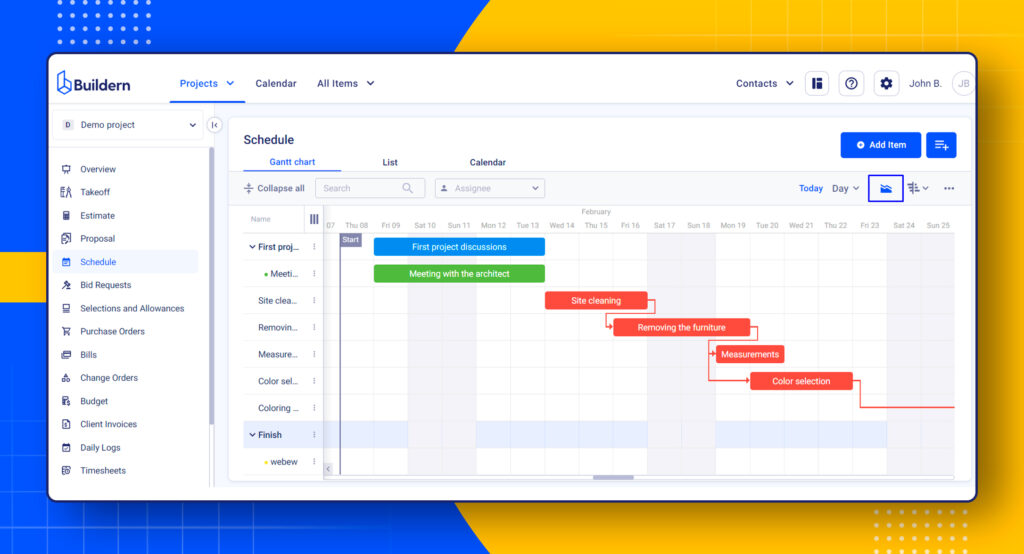
Maintaining this schedule over the life of the project requires continuous oversight. A well-developed schedule also serves you beyond the proposal stage. If you win the job, it becomes the baseline for managing the actual project and tracking progress.
Recommended reading:
Offer a Strong Value (Not Just Price)
The lowest bid does not always win, especially when owners are looking for contractors who offer the most value for a complex, long-term project.
In addition to cost-effectiveness, your proposal should clearly explain what sets the team apart, whether it’s innovative construction methods, sustainable design experience, or a proven ability to deliver on time and within budget.
A strong value is a secret card showing how you will do it better than competitors, giving the owner confidence that choosing you is a smart decision.
Highlight Relevant Experience and Team Strength
Owners want evidence that you can handle their project successfully. Therefore, the contractor has to show relevant past projects demonstrating experience with similar scopes, complexities, or building types.
Another valuable asset is including the strength of your team, their roles, credentials, and specialization in a particular field (e.g., electric heavy machinery) to explain how their expertise will contribute to the project.
In construction, communication issues are visible from day one. Even the best technical proposal can fall short if the owner doubts your ability to coordinate and manage the project.
Summing Up RFP in Construction
When looking at an RFP for the first time, one may think it’s about numbers, but it is not a simple bid where the lowest price wins. The project owner sends an RFP expecting to receive a realistic plan, a well-prepared estimate, and a clear value proposition.
It is the groundwork for a successful project, both for the project owner and the contractor or a team bidding for the job. The project owner should go beyond a template and include some information that is of critical importance for smart bidding.
Meanwhile, the contractors who win the most profitable RFPs are those who present more data rather than ambiguity. An RFP should be used strategically. If the data presented in a response to the RFP is relevant and detailed, it lays the background for further phases of the project lifecycle.

What Does RFP Stand for in Construction?
In construction, an RFP is a formal document issued by the project owner inviting contractors to submit their proposal for a specific construction project. It includes a summary of the key project details and also points to fill in by the contractors to present their skills, expertise, and price for the job.
What is an RFP vs RFQ?
An RFP requests detailed proposals, including approach, experience, and cost, while an RFQ focuses only on pricing for clearly defined materials or services.
Is There a Template for RFP in Construction?
Yes, most professional RFPs follow an industry standard structure. Project owners can use the “gold standards” like the templates by the AIA (American Institute of Architects), but they usually customize them to meet the company’s standards.